
DESIGN RESEARCH | SOCIAL DESIGN
Grounds for Gathering
Lessons from coffee shops on placemaking.
Faculty Advisor: Cathryn Ploehn
Design Research Team: Kenny Ly, Manoo Sirivelu, Abraham Neiswinter, Madison Tran, Emma McBride, Grace Park
January-May 2025
A 3-month independent study exploring what makes coffee shops effective third places. Drawing on sociologist Ray Oldenburg’s framework from The Great Good Place, I led a mixed-methods research project that combined fieldwork in Austin coffee shops with a participatory design workshop. Together with a small interdisciplinary team, I mapped how design, atmosphere, and social norms come together to create (or undermine) belonging in everyday spaces.
Why coffee shops, why now
As public life becomes more fragmented (remote work, digital connection, rising loneliness), spaces where people can simply be around others feel increasingly rare. At the same time, coffee shops are full. Even when every seat is taken, people keep showing up.
Grounds for Gathering started with a hunch that the success of coffee shops as public spaces has less to do with the quality of the coffee, and more to do with the subtle mix of design decisions, social cues, and emotional atmosphere that make them feel like “a home away from home.” Using Ray Oldenburg’s idea of the third place as a starting point, I wanted to understand how that shows up in Austin today, and what we can learn from it in order to design better public spaces.
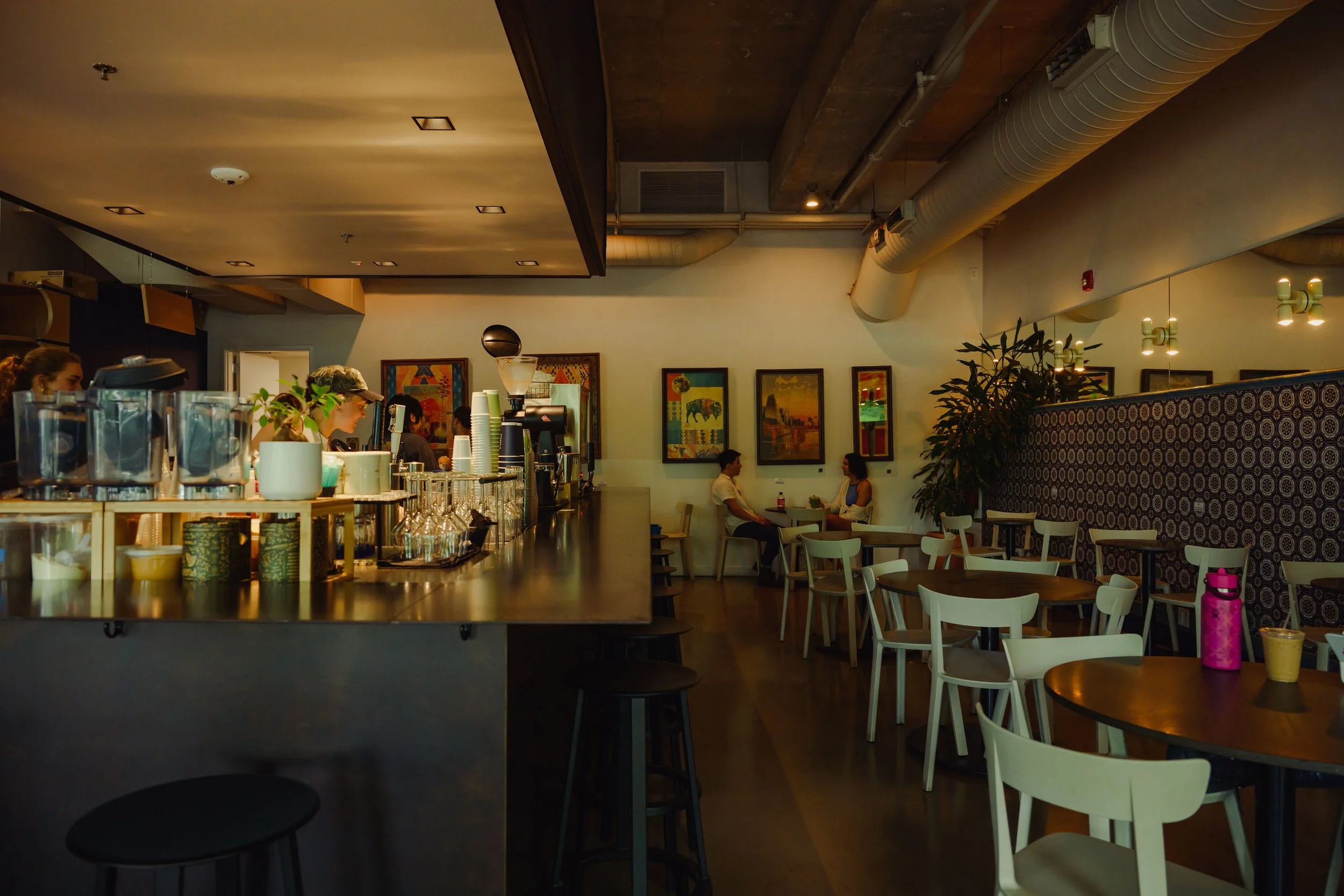
Photo by Manoo Sirivelu
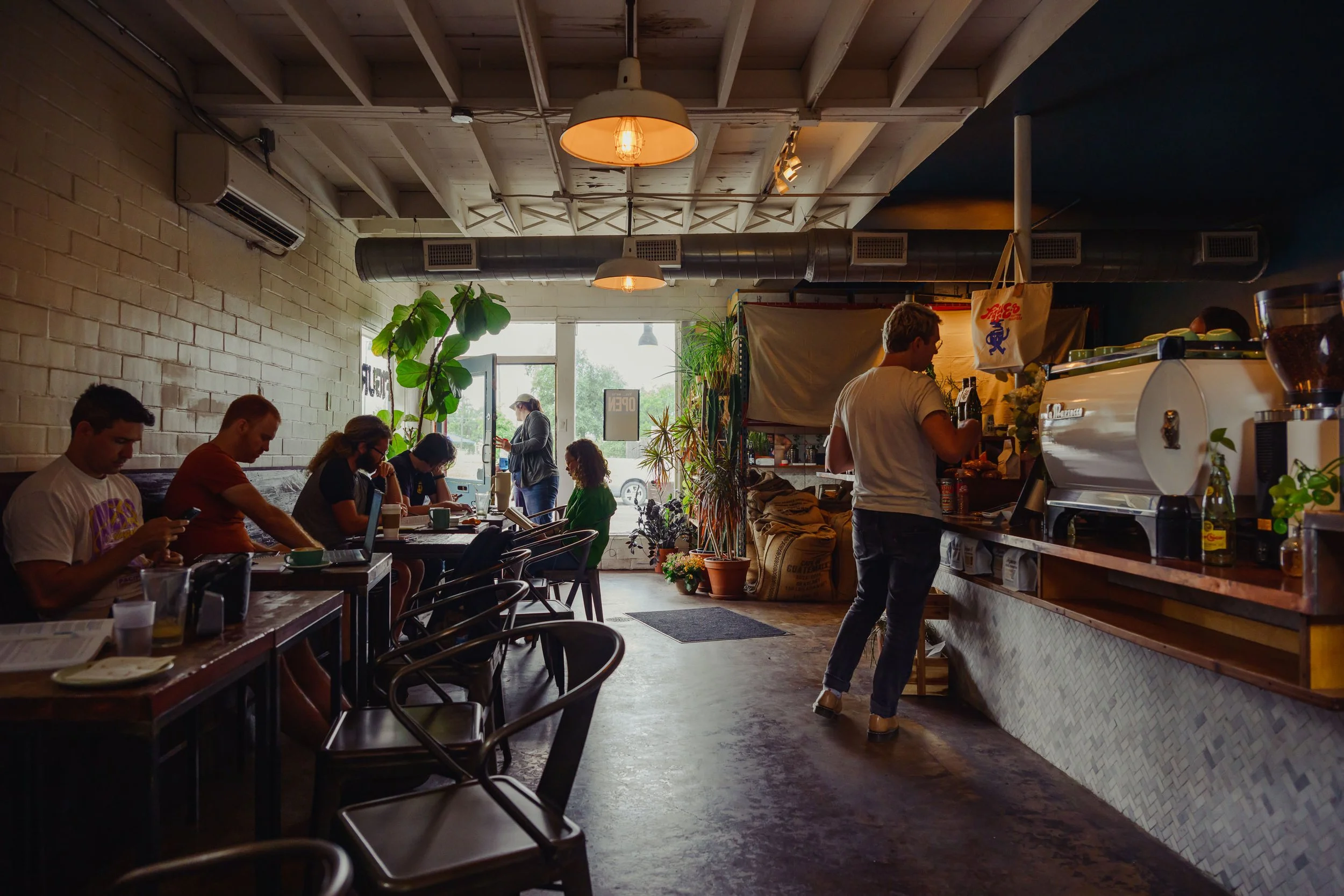
Photo by Manoo Sirivelu
How might we understand what makes a coffee shop feel like a true third place, beyond aesthetics, so we can borrow those principles to design better spaces for belonging elsewhere?
My role and research approach
I created and led this project end-to-end: defining the research questions, recruiting collaborators, designing the methods, facilitating the workshop, and synthesizing our findings into a written report and early design frameworks.
The project used a mixed-methods approach:
Field research across 10 Austin coffee shops
Casual interviews with patrons and staff
Spatial mapping and behavioral observation
A participatory design workshop with 6 participants across disciplines and social groups
Throughout, we used a framework modeled after Oldenburg’s characteristics of third places as a way to notice how third-place qualities show up, break down, or get reinterpreted in contemporary, commercial spaces.
Observing the coffee shop in the wild
Over the course of about a month and a half, our team visited 10 coffee shops across Austin, from neighborhood staples to sleek, highly curated cafés. At each location, we used a flexible worksheet to guide our observations:
Physical layout and seating patterns
Ease of access and circulation
Customer behavior and how long people lingered
Staff interactions, tone, and visible “regulars”
Overall atmosphere and what it seemed to invite (work, play, performance, hiding, etc.)
Instead of rating spaces on a numeric scale, we focused on qualitative notes: what people were doing, how they moved, when they stayed, and when they left. These observations gave us a grounded, lived-in sense of how third-place qualities show up in real time.
Making meaning together
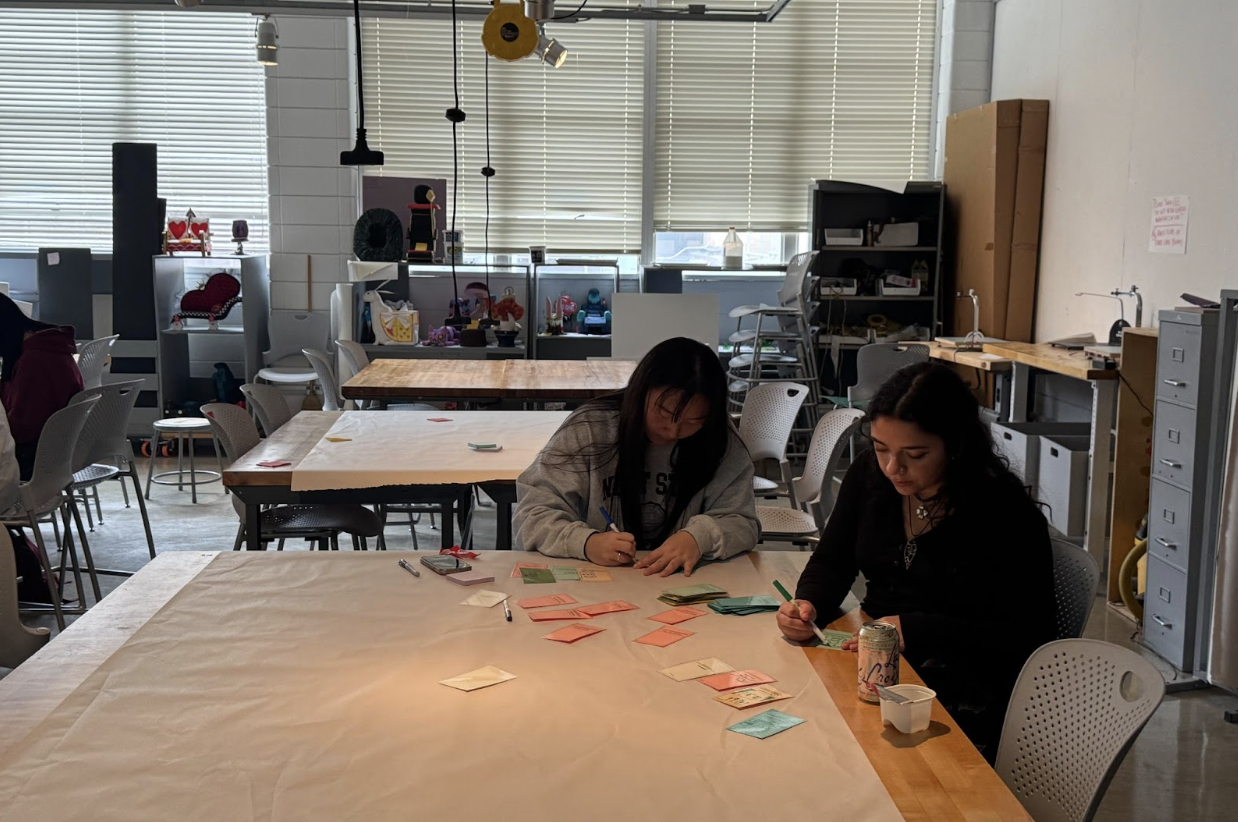
Because this project is ultimately about how people gather, I didn’t want synthesis to happen only in my head or on my laptop. I designed a three-part participatory design workshop that invited 6 participants to co-make sense of what makes a great third place:
Probing: “Your go-to spot”
Participants shared stories about the places they return to again and again. We clustered these anecdotes into themes like Atmosphere, Proximity, Audience, and Material, surfacing the emotional criteria people use to judge a space.
Priming: Gallery walk
I curated images of different coffee shops and asked: “What would you do in this space?” and “Who does this seem to be for?” These prompts, loosely based on Oldenburg’s principles, helped participants put words to their gut feelings about invitation, exclusion, and comfort.
Generating: Typology Cards
Using a deck of cards I designed based on our key categories of a space, based on our fieldwork (Social Dynamics, Layout & Flow, Decor & Design, Seating, Lighting), participants assembled their own hypothetical coffee shops in response to scenario prompts. In “building” a space, they revealed what they valued (and what they rejected) in real-world environments.
From this, we co-created a participant-driven set of criteria for successful third places: Agency, Ambience, Accessibility, Activities, and Amicability. This workshop surfaced tacit knowledge among participants, validated my team’s field research, and provided a more contemporary, human-voiced echo of Oldenburg’s original framework.
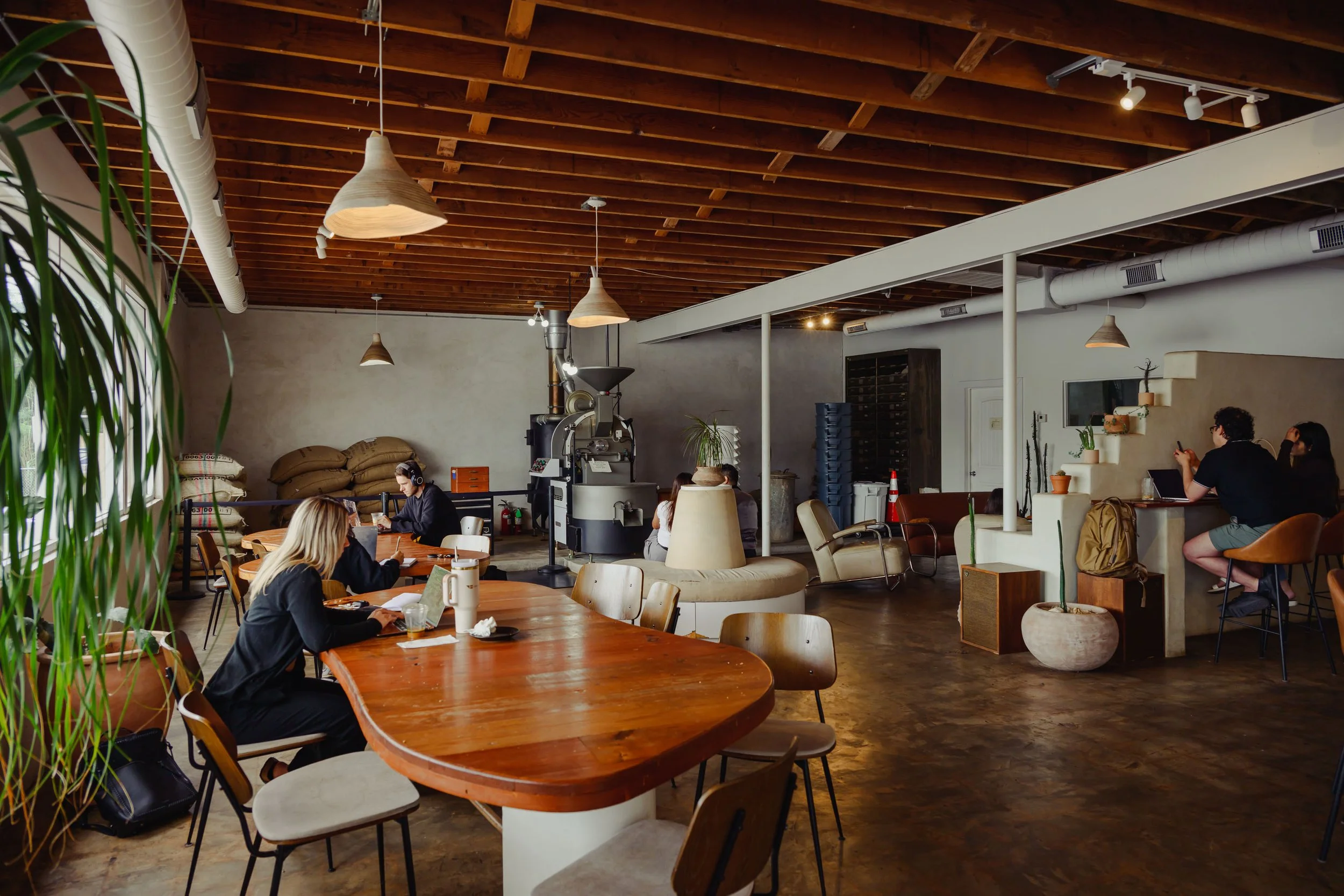
Photo by Manoo Sirivelu
Key themes & tensions
A few patterns and tensions kept resurfacing across sites:
The Balancing Act Between Coziness and Capitalism
Aesthetic elements like warm lighting, plush couches, and greenery suggest invitation, but to what, and to whom? Some coffee shops emulate third-place vibes, but the performance of comfort doesn’t always translate to actual belonging. These coffee shops (in contrast to others visited throughout the course of the project) feel more curated, even performative, designed to be seen in, but maybe not fully be in.
Design as a social signal
One of the insights that emerged during the final reflection of the workshop was a recurring desire for agency: the ability to shape one’s environment, not be shaped by it. However, an interesting finding emerged during synthesis: human behavior, like a liquid, takes the shape of its container. We flow through the paths we’re given and often adapt without realizing it. For example, though we may not be aware, elements such as narrow bar seating, limited outlets, or communal tables suggest who should sit where, for how long, and in what way.
Conditional belonging in consumer spaces
Coffee shops often feel open and communal as long as you can afford to participate. In some locations, high-end retail and a very homogeneous crowd sent a clear message about who the space was really for.
Wanting to be alone together
People don’t always want to connect, but they often want to be near others. Participants and patrons consistently sought out spaces where they could retreat without fully withdrawing. Coffee shops become a stage for this delicate balance: they are public enough to feel connected, yet malleable enough to provide solitude.
The desire for third places, even when they’re imperfect
People kept returning to cafés that weren’t “great” by Oldenburg’s standards, simply because they offered something: Wi-Fi, a table, other humans nearby. The need for third places is so strong that even imperfect approximations are used and loved.
Moving forward
Grounds for Gathering didn’t try to “fix” coffee shops. Instead, it offered a language and set of patterns for talking about what they already do, for better or worse, and how those lessons might travel to other spaces, such as libraries, community centers, campus lounges, and even digital products.
The work now lives as:
A written research paper
A set of Typology Cards that can be used as a conversation tool
Early prompts for applying “coffee shop logics” to other public spaces
Since the conclusion of Grounds for Gathering, I have kicked off Common Thread, a project that focuses less on the place and more on the people. It is an exploration how we may use storytelling and other participatory design frameworks to empower emerging hosts to gather their communities and build stronger, more profound relationships. more on this soon ;)
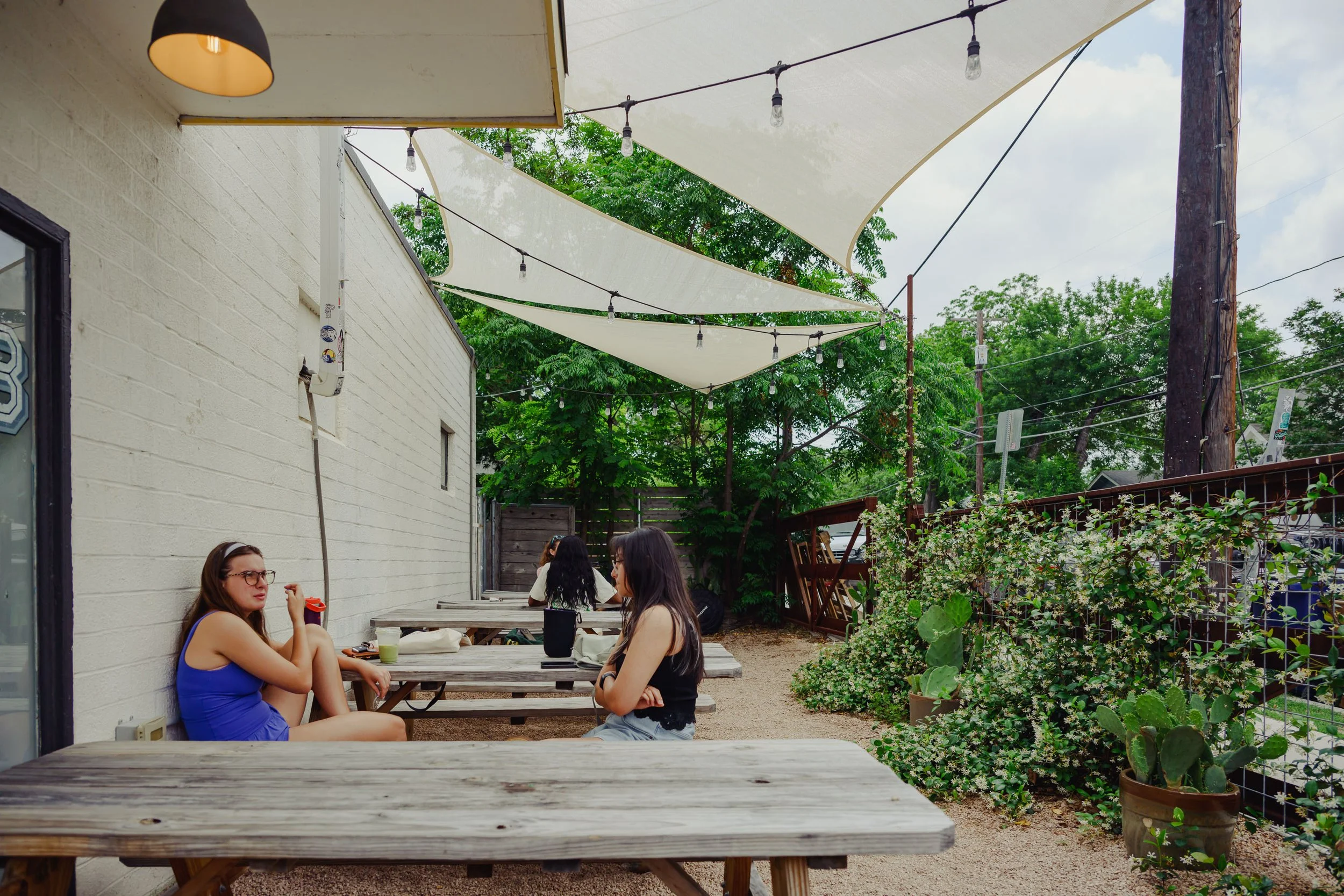
Photo by Manoo Sirivelu